I've been saving a bunch of these to show to my PCs in the upcoming Dawnlands game. I figure if they choose their knives from these photos, they're likely to actually remember and possibly even use them. These are all pictures of incredible Bowie knives from BladeForums.
First thread
Second thread
Third thread
Check them out!
Nov 24, 2012

Nov 13, 2012
Mao's Little Brown Books
"If we have shortcomings, we are not afraid to have them pointed out and criticized, because we serve the people. Anyone, no matter who, may point out our shortcomings. If he is right, we will correct them. If what he proposes will benefit the people, we will act upon it."
I am making one last ditch effort to salvage the Necrocarcerus game before cancelling it and starting another game up in its place. This is after discussing the issues in the current game with a couple of the players. The most frustrating and unfortunate situation to be in with a game is when there is no single, critical flaw, but only a thousand minor ones. In our case, the issues range from personality clashes to organisational issues, to thematic and aesthetic unfamiliarity, to rules confusion, to creative block on my part. Drastic measures are needed.
"Another point that should be mentioned in connection with inner-Party criticism is that some comrades ignore the major issues and confine their attention to minor points when they make their criticism. They do not understand that the main task of criticism is to point out political and organizational mistakes. As to personal shortcomings, unless they are related to political and organizational mistakes, there is no need to be overcritical or the comrades concerned will be at a loss as to what to do. Moreover, once such criticism develops, there is the great danger that within the Party attention will be concentrated exclusively on minor faults, and everyone will become timid and overcautious and forget the Party's political tasks."
The Necrocarcerus group is part of the Emern group, plus three new players (as in, new to playing adventure games, not just this campaign). I thought the group would be able to build on the knowledge and experience-base from the Emern game to flow into a new style of play, but in hindsight, I think the foundations we had in Emern were shakier than anticipated. This problem was exacerbated when I expected 2-3 of the players to be familiar with the source influences for this game (Dark Souls, etc.) and it turned out none of them were in any great detail. I have been unable to use this blog or other means to educate them in the world as thoroughly as I would have preferred due to work commitments. Many of them are also extremely busy, and the net result has been that the entire group is in a reactive, rather than proactive, mode about scheduling attendance, handling events in game, and solving several personal issues that impact play at the table.
"As for criticism, do it in good time; don't get into the habit of criticizing only after the event."
"Don't wait until problems pile up and cause a lot of trouble before trying to solve them. Leaders must march ahead of the movement, not lag behind it."
I'm making a last effort to "save" the game by pushing for proactivity on the part of a few key influence-wielders at the table. I'm hoping to dampen down disruptions in play with their help; to spend more time exploring the world, clarifying it themes, and fleshing out details. I'm also having one of the players push for a longer-lead-time on cancellations from the others, since we've been having some frustrating last minute cancellations that leave us unable to play. My goal is to shift us over to proactivity by making players feel as they own a piece of the game, rather than just showing up to be entertained by me. I am going to socialise parts of it, in other words.
"If we have a correct theory but merely prate about it, pigeonhole it and do not put it into practice, then that theory, however good, is of no significance."
I am making one last ditch effort to salvage the Necrocarcerus game before cancelling it and starting another game up in its place. This is after discussing the issues in the current game with a couple of the players. The most frustrating and unfortunate situation to be in with a game is when there is no single, critical flaw, but only a thousand minor ones. In our case, the issues range from personality clashes to organisational issues, to thematic and aesthetic unfamiliarity, to rules confusion, to creative block on my part. Drastic measures are needed.
"Another point that should be mentioned in connection with inner-Party criticism is that some comrades ignore the major issues and confine their attention to minor points when they make their criticism. They do not understand that the main task of criticism is to point out political and organizational mistakes. As to personal shortcomings, unless they are related to political and organizational mistakes, there is no need to be overcritical or the comrades concerned will be at a loss as to what to do. Moreover, once such criticism develops, there is the great danger that within the Party attention will be concentrated exclusively on minor faults, and everyone will become timid and overcautious and forget the Party's political tasks."
The Necrocarcerus group is part of the Emern group, plus three new players (as in, new to playing adventure games, not just this campaign). I thought the group would be able to build on the knowledge and experience-base from the Emern game to flow into a new style of play, but in hindsight, I think the foundations we had in Emern were shakier than anticipated. This problem was exacerbated when I expected 2-3 of the players to be familiar with the source influences for this game (Dark Souls, etc.) and it turned out none of them were in any great detail. I have been unable to use this blog or other means to educate them in the world as thoroughly as I would have preferred due to work commitments. Many of them are also extremely busy, and the net result has been that the entire group is in a reactive, rather than proactive, mode about scheduling attendance, handling events in game, and solving several personal issues that impact play at the table.
"As for criticism, do it in good time; don't get into the habit of criticizing only after the event."
"Don't wait until problems pile up and cause a lot of trouble before trying to solve them. Leaders must march ahead of the movement, not lag behind it."
I'm making a last effort to "save" the game by pushing for proactivity on the part of a few key influence-wielders at the table. I'm hoping to dampen down disruptions in play with their help; to spend more time exploring the world, clarifying it themes, and fleshing out details. I'm also having one of the players push for a longer-lead-time on cancellations from the others, since we've been having some frustrating last minute cancellations that leave us unable to play. My goal is to shift us over to proactivity by making players feel as they own a piece of the game, rather than just showing up to be entertained by me. I am going to socialise parts of it, in other words.
"If we have a correct theory but merely prate about it, pigeonhole it and do not put it into practice, then that theory, however good, is of no significance."
With adventure games as with all other social activities, history is prior to structure, training and practice prior to theory. Unfortunately, due to work commitments and personal creative block, the bric-a-brac I created for Necrocarcerus (maps, cards, etc.) is more sporadic and lower quality than the stuff I created for Emern. My inclination is to hand the group over to one of the players (a specific player I have in mind) who does have time to devote to producing this material, after training him on how to produce it. I should also continue to assist him in producing it. While appealing, this would be a stop-gap measure until he too became jammed up with work or other responsibilities. The best possible outcome would be to train all the players on how to produce it, and then to build opportunities to produce it into the game.
For example, when the players encounter a collection of random potions, have each player write out a duration, an effect, and an appearance on separate pieces of paper. The referee can create either the same number of entries as anyone else, or perhaps salt things with a few random ones. Everybody puts their entries forward face down collected by type, which is then shuffled (so all durations go together, all appearances, all effects). Whenever someone drinks or tests a potion, you draw an appearance, effect and duration. Some potions may be more useful when applied to foes, which should create a nice mix. And of course, you can recycle these back into the deck each time you have more potions appear, so that you're gradually building.a vast library of possible effects.
I'm also tempted to do this with magical treasure when PCs discover a hoard. PCs choose one of three targets ("The wielder", "Someone else", "the object itself"), define an effect (no mechanics), and then describe the object, and these are randomly recombined into actual items by drawing from each deck. If these are successful, I may expand it from there - monsters, NPCs, etc.
'Complacency is the enemy of study. We cannot really learn anything until we rid ourselves of complacency. Our attitude towards ourselves should be "to be insatiable in learning" and towards others "to be tireless in teaching".'
"In times of difficulty we must not lose sight of our achievements, must see the bright future and must pluck up our courage."
For example, when the players encounter a collection of random potions, have each player write out a duration, an effect, and an appearance on separate pieces of paper. The referee can create either the same number of entries as anyone else, or perhaps salt things with a few random ones. Everybody puts their entries forward face down collected by type, which is then shuffled (so all durations go together, all appearances, all effects). Whenever someone drinks or tests a potion, you draw an appearance, effect and duration. Some potions may be more useful when applied to foes, which should create a nice mix. And of course, you can recycle these back into the deck each time you have more potions appear, so that you're gradually building.a vast library of possible effects.
I'm also tempted to do this with magical treasure when PCs discover a hoard. PCs choose one of three targets ("The wielder", "Someone else", "the object itself"), define an effect (no mechanics), and then describe the object, and these are randomly recombined into actual items by drawing from each deck. If these are successful, I may expand it from there - monsters, NPCs, etc.
'Complacency is the enemy of study. We cannot really learn anything until we rid ourselves of complacency. Our attitude towards ourselves should be "to be insatiable in learning" and towards others "to be tireless in teaching".'
"In times of difficulty we must not lose sight of our achievements, must see the bright future and must pluck up our courage."
Oct 20, 2012
Inhabitants of Necrocarcerus: Citizens and Guardians
Now that the PCs have been in Necrocarcerus for a while, one of the ones whose character died is creating a character familiar with the place. Therefore, I wrote the following primer to the inhabitants Necrocarcerus for his use:
Necrocarcerus is a vast city the size of Australia which serves as the temporary afterlife for twenty-one worlds. The identity of its creator is not known, though many assume it was one or more of the various gods of those twenty-one worlds. That there are more than twenty-one worlds is known to those who study such things, though what happens to the souls of the dying on those worlds is not. Though many of those worlds have sentient life forms other than humans, almost all souls in Necrocarcerus are human, with only a few unusual exceptions.
The Necrocarcerus "Program" takes place over a span of ten thousand years, at which point everything is destroyed, the Guardians and Necrocarcerus are recreated, and all citizens who did not manage to transcend are set back into the rotation to wait for a second incarnation. The current year is 9995, though the general population is not widely aware of this. The twenty-one linked worlds are not destroyed, so far as anyone can tell, though why not is unclear.
The dead souls who come to Necrocarcerus, whatever time they may die in their own world, are incarnated on the schedule of the Guardians, which mean that two people who died several thousand years apart may awaken at the same time. All times in Necrocarcerus are coterminous with all times in the twenty-one worlds, so that one moving across the Chorismos, the gap between worlds, can enter or exit Necrocarcerus at any point in its history, to enter any point in the destination's history, and vice versa.
The particular area of Necrocarcerus that the campaign is set in is known as the Lythmarch, after a particularly troublesome rogue who operates in the area. The primary temporal geographic periods its inhabitants are incarnated from are Lirnthians during the eight hundred years of the Empire of Shothon, Zuraithi from between the founding of the church of Solok the Mighty and the fall of its successor cult the Order of Ukal-Solok two thousand years later, and Dorivites while Thazul is active, some four hundred years.
Inhabitants of Necrocarcerus
The population of Necrocarcerus breaks down into several major groups, with a small number of outliers.
The Citizens
Citizens of Necrocarcerus are those people who Necrocarcerus was intended for, those inhabitants of the twenty-one worlds who have died without strong moral alignment. Their bodies, like almost everything else in Necrocarcerus, are made of a substance known as "hyle". They lack most internal organs other than lungs, a brain, a heart and a small cavity in their chest that serves as a storage chamber for blood. Upon incarnation in Necrocarcerus, citizens are drained of the memories of their lives by the Guardians, which becomes the drug known as "Nepenthe". The soul of an incarnated citizen becomes their actual breath, which is known as "pneuma".
Cutting one open releases pneuma, instead of blood, and the total dissipation of one's pneuma is the total destruction of one's soul. Citizens who have lost pneuma slowly regain it over time by breathing. As already dead, citizens are killed only by the loss of their pneuma - cutting off heads, arms, disembowling or impaling them are not inherently fatal. Detached arms, heads, etc. can be repaired like any other wound, by being bolted or sewn back on. This crude measure also allows the "corpses" of slain citizens to be harvested, so that it is not uncommon to find citizens with multiple arms, eyes, etc. Other than the occasional dose of blood, citizens do not need to eat, though they do enjoy doing so. They sleep as if they were still alive, and dream of their lives, even if they were drained of their memories successfully.
Citizens are incarnated in vast halls created for this purpose by the Guardians, as hyle becomes available (there is a finite amount, and much is needed elsewhere). They are given a short explanation of their new situation, including a tour of the local area of Necrocarcerus they are in, and an explanation of transcendence as the local Guardians understand it, and then set free in the city. Depending on the area, they may be hired as cheap labour, enslaved, destroyed, ignored, or proselytised by one or more cults as they step out of the incarnation hall. In the Lythmarch, Lyth has recruiters who try to tempt them to serve him, which many do.
Transcendence is the process by which a soul leaves Necrocarcerus, and is the goal all citizens are given by the Guardians who incarnate them. Some transcend within moments of being incarnated, but for most the process is centuries long, if it happens at all. To transcend, one must fully align one's self with good or evil, expressed through repeated action. Across twenty-one worlds, there are many different moral systems, and there is a great deal of debate about which one is most "true", or at least most effective at causing one to transcend. There is no definitive answer.
The Guardians
The Guardians were created by whomever created Necrocarcerus, and are the order of beings responsible for maintaining, preserving and defending it. The Guardians are not citizens, but a unique class of being also made of hyle. They begin as semi-sentient, and over decades and centuries they develop into full consciousness. The small number of fully conscious Guardians are the leaders of their society. They are capable of creating more of themselves, with responsibility for doing so given to the Blues. There are only a small number of them (77,777) compared to the vast extent of Necrocarcerus. The Guardians come in seven types, each associated with a colour and a function.
Red - Fire Control
Orange - Transport
Yellow - Population Management
Green - Repair
Blue - Production
Violet - Coordination
White - Design
Guardians resemble monks wearing heavy robes. Their hands and face are streaked with dye of the appropriate colour to their function. Guardians normally look more or less human, though changing their appearance is relatively trivial for them. The great power of the Guardians derives from their ability to work hyle through a process resembling magic or even mere will. They use this power to execute their specific function, and each type has a relatively specialised range of possible manipulations.
They can be killed, and while they can be recreated over time, the new version returns to the semi-sapient form, and a new personality will develop, so that conscious Guardians are as wary of death as any citizen. They are generally non-violent, though they recruit proxies amongst the citizens to serve their need for violence when it arises. This is not a philosophical commitment to non-violence, merely a recognition that it lies outside their talents.
The incarnation centres throughout Necrocarcerus serve as their "temples" and headquarters. The Guardians are split into factions under the small number of fully-sentient Violets and Yellows. The factions almost never fight directly, instead using citizen, projector and undead proxies against one another when differences have become so severe that violence cannot be avoided. The factional differences are philosophical ones about the correct role of the Guardians and what the purpose of transcendence is.
Some of the larger factions:
Expediters - This faction believes that the goal of Necrocarcerus is for all citizens to transcend to the next state of existence (whose nature is unclear) by aligning themselves to one moral state or another, and the correct role of the Guardians is to facilitate that happening as rapidly and intensely as possible. They strive to create situations in which citizens must make moral choices, pushing them to identify more and more with good or evil. This often creates chaos, which in turn they exploit to create further decisions. The Expediters have been extremely active over the last century, as the Necrocarcerus Program prepares for destruction and recreation. They believe that more souls they help transcend, the fewer they have to deal with next time around. They are decentralised, and often uncoordinated. Many Expediters are nearly indistinguishable from rogues in their behaviour.
Jailers - The Jailers believe that the purpose of Necrocarcerus is to punish and reform those who failed to satisfy the speculated desires of the Creator during life. The people who did transcend only moments after appearing in Necrocarcerus, leaving only the flawed and weak behind. The Jailers believe it is the correct purpose of the order of Guardians to reforge these flawed individuals into ones better suited for the Creator's purposes. The societies of citizens that they create tend to be stable and long-lasting compared to the other factions, as well as highly organised and severe. They seek to prevent chaos and disruption to the Necrocarcerus Program,. The reform programs they initiate vary, but tend to focus on productive labour and organised action, with factories, state-like institutions, and a functioning economy. They are the largest faction, and have a rigid, hierarchical internal structure, led by a council of 7 Violets at the highest level.
Theosadists - The Theosadists believe that the Guardians are themselves the souls of those who have transcended, given power over Necrocarcerus as reward for fulfilling the creators desires, and that the remaining citizens are therefore theirs to use and dispose of as they please. The theosadists create grand monuments to their own glory, pursue ingenious but whimsical plans, and otherwise make Necrocarcerus into a hell for those under their rule. The Theosadists are the smallest and most hated faction of all the Guardians.
Perfectionists - The Perfectionists believe that souls that transcend are reincarnated back on the twenty-one living worlds as a reward for the force of will they display, and that this reincarnation in turn brings those worlds closer and closer to perfect accordance with the will of the Creator. The role of the Guardians is to prevent any but the truly worthy from transcending, with "truly worthy" defined by them as "good". The Perfectionists attempt to destroy those they consider evil, which almost always include projectors, rogues and the undead. They combine the penchant for chaos of the Expediters with the organisation of the Jailers, and they are often responsible for the closest things to wars that Necrocarcerus sees.
Necrocarcerus is a vast city the size of Australia which serves as the temporary afterlife for twenty-one worlds. The identity of its creator is not known, though many assume it was one or more of the various gods of those twenty-one worlds. That there are more than twenty-one worlds is known to those who study such things, though what happens to the souls of the dying on those worlds is not. Though many of those worlds have sentient life forms other than humans, almost all souls in Necrocarcerus are human, with only a few unusual exceptions.
The Necrocarcerus "Program" takes place over a span of ten thousand years, at which point everything is destroyed, the Guardians and Necrocarcerus are recreated, and all citizens who did not manage to transcend are set back into the rotation to wait for a second incarnation. The current year is 9995, though the general population is not widely aware of this. The twenty-one linked worlds are not destroyed, so far as anyone can tell, though why not is unclear.
The dead souls who come to Necrocarcerus, whatever time they may die in their own world, are incarnated on the schedule of the Guardians, which mean that two people who died several thousand years apart may awaken at the same time. All times in Necrocarcerus are coterminous with all times in the twenty-one worlds, so that one moving across the Chorismos, the gap between worlds, can enter or exit Necrocarcerus at any point in its history, to enter any point in the destination's history, and vice versa.
The particular area of Necrocarcerus that the campaign is set in is known as the Lythmarch, after a particularly troublesome rogue who operates in the area. The primary temporal geographic periods its inhabitants are incarnated from are Lirnthians during the eight hundred years of the Empire of Shothon, Zuraithi from between the founding of the church of Solok the Mighty and the fall of its successor cult the Order of Ukal-Solok two thousand years later, and Dorivites while Thazul is active, some four hundred years.
Inhabitants of Necrocarcerus
The population of Necrocarcerus breaks down into several major groups, with a small number of outliers.
The Citizens
Citizens of Necrocarcerus are those people who Necrocarcerus was intended for, those inhabitants of the twenty-one worlds who have died without strong moral alignment. Their bodies, like almost everything else in Necrocarcerus, are made of a substance known as "hyle". They lack most internal organs other than lungs, a brain, a heart and a small cavity in their chest that serves as a storage chamber for blood. Upon incarnation in Necrocarcerus, citizens are drained of the memories of their lives by the Guardians, which becomes the drug known as "Nepenthe". The soul of an incarnated citizen becomes their actual breath, which is known as "pneuma".
Cutting one open releases pneuma, instead of blood, and the total dissipation of one's pneuma is the total destruction of one's soul. Citizens who have lost pneuma slowly regain it over time by breathing. As already dead, citizens are killed only by the loss of their pneuma - cutting off heads, arms, disembowling or impaling them are not inherently fatal. Detached arms, heads, etc. can be repaired like any other wound, by being bolted or sewn back on. This crude measure also allows the "corpses" of slain citizens to be harvested, so that it is not uncommon to find citizens with multiple arms, eyes, etc. Other than the occasional dose of blood, citizens do not need to eat, though they do enjoy doing so. They sleep as if they were still alive, and dream of their lives, even if they were drained of their memories successfully.
Citizens are incarnated in vast halls created for this purpose by the Guardians, as hyle becomes available (there is a finite amount, and much is needed elsewhere). They are given a short explanation of their new situation, including a tour of the local area of Necrocarcerus they are in, and an explanation of transcendence as the local Guardians understand it, and then set free in the city. Depending on the area, they may be hired as cheap labour, enslaved, destroyed, ignored, or proselytised by one or more cults as they step out of the incarnation hall. In the Lythmarch, Lyth has recruiters who try to tempt them to serve him, which many do.
Transcendence is the process by which a soul leaves Necrocarcerus, and is the goal all citizens are given by the Guardians who incarnate them. Some transcend within moments of being incarnated, but for most the process is centuries long, if it happens at all. To transcend, one must fully align one's self with good or evil, expressed through repeated action. Across twenty-one worlds, there are many different moral systems, and there is a great deal of debate about which one is most "true", or at least most effective at causing one to transcend. There is no definitive answer.
The Guardians
The Guardians were created by whomever created Necrocarcerus, and are the order of beings responsible for maintaining, preserving and defending it. The Guardians are not citizens, but a unique class of being also made of hyle. They begin as semi-sentient, and over decades and centuries they develop into full consciousness. The small number of fully conscious Guardians are the leaders of their society. They are capable of creating more of themselves, with responsibility for doing so given to the Blues. There are only a small number of them (77,777) compared to the vast extent of Necrocarcerus. The Guardians come in seven types, each associated with a colour and a function.
Red - Fire Control
Orange - Transport
Yellow - Population Management
Green - Repair
Blue - Production
Violet - Coordination
White - Design
Guardians resemble monks wearing heavy robes. Their hands and face are streaked with dye of the appropriate colour to their function. Guardians normally look more or less human, though changing their appearance is relatively trivial for them. The great power of the Guardians derives from their ability to work hyle through a process resembling magic or even mere will. They use this power to execute their specific function, and each type has a relatively specialised range of possible manipulations.
They can be killed, and while they can be recreated over time, the new version returns to the semi-sapient form, and a new personality will develop, so that conscious Guardians are as wary of death as any citizen. They are generally non-violent, though they recruit proxies amongst the citizens to serve their need for violence when it arises. This is not a philosophical commitment to non-violence, merely a recognition that it lies outside their talents.
The incarnation centres throughout Necrocarcerus serve as their "temples" and headquarters. The Guardians are split into factions under the small number of fully-sentient Violets and Yellows. The factions almost never fight directly, instead using citizen, projector and undead proxies against one another when differences have become so severe that violence cannot be avoided. The factional differences are philosophical ones about the correct role of the Guardians and what the purpose of transcendence is.
Some of the larger factions:
Expediters - This faction believes that the goal of Necrocarcerus is for all citizens to transcend to the next state of existence (whose nature is unclear) by aligning themselves to one moral state or another, and the correct role of the Guardians is to facilitate that happening as rapidly and intensely as possible. They strive to create situations in which citizens must make moral choices, pushing them to identify more and more with good or evil. This often creates chaos, which in turn they exploit to create further decisions. The Expediters have been extremely active over the last century, as the Necrocarcerus Program prepares for destruction and recreation. They believe that more souls they help transcend, the fewer they have to deal with next time around. They are decentralised, and often uncoordinated. Many Expediters are nearly indistinguishable from rogues in their behaviour.
Jailers - The Jailers believe that the purpose of Necrocarcerus is to punish and reform those who failed to satisfy the speculated desires of the Creator during life. The people who did transcend only moments after appearing in Necrocarcerus, leaving only the flawed and weak behind. The Jailers believe it is the correct purpose of the order of Guardians to reforge these flawed individuals into ones better suited for the Creator's purposes. The societies of citizens that they create tend to be stable and long-lasting compared to the other factions, as well as highly organised and severe. They seek to prevent chaos and disruption to the Necrocarcerus Program,. The reform programs they initiate vary, but tend to focus on productive labour and organised action, with factories, state-like institutions, and a functioning economy. They are the largest faction, and have a rigid, hierarchical internal structure, led by a council of 7 Violets at the highest level.
Theosadists - The Theosadists believe that the Guardians are themselves the souls of those who have transcended, given power over Necrocarcerus as reward for fulfilling the creators desires, and that the remaining citizens are therefore theirs to use and dispose of as they please. The theosadists create grand monuments to their own glory, pursue ingenious but whimsical plans, and otherwise make Necrocarcerus into a hell for those under their rule. The Theosadists are the smallest and most hated faction of all the Guardians.
Perfectionists - The Perfectionists believe that souls that transcend are reincarnated back on the twenty-one living worlds as a reward for the force of will they display, and that this reincarnation in turn brings those worlds closer and closer to perfect accordance with the will of the Creator. The role of the Guardians is to prevent any but the truly worthy from transcending, with "truly worthy" defined by them as "good". The Perfectionists attempt to destroy those they consider evil, which almost always include projectors, rogues and the undead. They combine the penchant for chaos of the Expediters with the organisation of the Jailers, and they are often responsible for the closest things to wars that Necrocarcerus sees.
Oct 10, 2012
Necrocarcerus Session 4 Round Up
From the email I just sent to the PCs:
"Final tally: One PC beheaded, one PC's head crushed at terminalvelocity while attempting to escape from a freefall tube, one PC disemboweled by a skull-ninja, one PC impaled by said skull ninja, one PC lost in the mysterious ether of the malfunctioning freefall tube, and one PC captured by the projector cult."
I was really hoping the guy who was beheaded would survive if one of the other PCs got to him in time with a healing potion. Since the characters are already dead and in the afterlife, they lack vital organs, and are basically bags of solid ghost-putty filled with soul-air, so being beheaded isn't inherently incurable.
The two best sections tonight were:
1) When Rogar threw a shrinking potion at an ogre mage and shrunk him to 8 inches tall, which led Dathun to throw the ogre mage into a sack. Carlos sawed him to death with a longsword through the sack, and the description was "Imagine what it looks like when a kid tears apart a doll".
2) Carlos throwing a javelin of returning at a gold coin endlessly circling between two portals rigged so that anything between them was in constant freefall, which caused the portals to suck all the PCs into the tube due to the interaction between the two kinds of teleportation magic. They then had to push off one another to escape, which resulted in Carlos striking his head against the lip of the bottom portal and dying, his body continuing in freefall until Logan swatted it out with his shield.
"Projector cults" are groups of individuals from the living world that attempt to travel to Necrocarcerus, which is forbidden, and the dead who attempt to assist them (in exchange for blood, fire, magic, souls, information and other.stuff). The PCs have been sent by the Guardians to kill a projector cult to prove their worth.
I was really hoping the guy who was beheaded would survive if one of the other PCs got to him in time with a healing potion. Since the characters are already dead and in the afterlife, they lack vital organs, and are basically bags of solid ghost-putty filled with soul-air, so being beheaded isn't inherently incurable.
The two best sections tonight were:
1) When Rogar threw a shrinking potion at an ogre mage and shrunk him to 8 inches tall, which led Dathun to throw the ogre mage into a sack. Carlos sawed him to death with a longsword through the sack, and the description was "Imagine what it looks like when a kid tears apart a doll".
2) Carlos throwing a javelin of returning at a gold coin endlessly circling between two portals rigged so that anything between them was in constant freefall, which caused the portals to suck all the PCs into the tube due to the interaction between the two kinds of teleportation magic. They then had to push off one another to escape, which resulted in Carlos striking his head against the lip of the bottom portal and dying, his body continuing in freefall until Logan swatted it out with his shield.
"Projector cults" are groups of individuals from the living world that attempt to travel to Necrocarcerus, which is forbidden, and the dead who attempt to assist them (in exchange for blood, fire, magic, souls, information and other.stuff). The PCs have been sent by the Guardians to kill a projector cult to prove their worth.
Sep 21, 2012
20 x 20 Room's Incredible Essay on Cancer and Dice Mechanics
Jim Henley was diagnosed with tongue cancer and wrote an incredible essay about how his chances of survival, and his conceptions of whether he has good odds or not, differ from the assumptions of roleplaying games. It's hard to explain clearly, so go read it.
Sep 17, 2012
The Long Narrative: Anti-narrativism
MDA: A Formal Approach to Game Design and Game Research goes far beyond the typical Forge nonsense used in theoretical discussion to get into a really useful model for games. It's worth reading, since it bears pretty directly on why I consider myself an "anti-narrative" referee, and what that means.
I want to pull this part out from the beginning: "Fundamental to this framework is the idea that games are more like artifacts than media. By this we mean that the content of a game is its behavior not the media that streams out of it towards the player."
By "anti-narrative", I mean that my primary focus as a referee is not on "telling a story", moving PCs from rising action to rising action until an emotionally cathartic climax is attained, but on presenting interesting and meaningful choices with escalating consequences, and pushing the PCs to decide which option to take. The peaks and troughs on a plot graph for me represent varying levels of PC agency over time. Sometimes they are potent enough to layout all the alternatives and choose freely amongst them, and sometimes they're scrambling to react to a loss of control, and that oscillation takes over from the oscillations of inner character that drive a dramatic plot. The transition between acts tends align between the two models, as an act in a traditional drama is opened or closed by a choice that cannot be undone, whereas under this model, an act is opened or closed by a choice that the PCs must make but cannot exert any agency to layout the options of ("You must either go to war with the Baron or surrender to him. Which will you do?").
I chose this kind of substructure to my games because I find it simplifies the planning for what otherwise appear as traditional story-driven, plot-heavy games. By focusing less on specific events that must happen, and by instead aiming at specific choices that must be made, the substructure is freed from dependence on particular configurations of characters, material, etc. If a single NPC is killed or not, if the PCs steal a specific item, these no longer "sink" a story like they would in a more rigidly-crafted tale. A choice is a virtual entity that can be realised through many possible configurations of characters, material, external events, etc.
In play, this means fewer "cutscenes", fewer invincible NPC badasses, and of course, more meaningful choices (both in quantity and intensity). This method is not "illusionism" - the consequences of PC choice, as the core stake, must be respected, and developed appropriately to the decisions they make. Nor does it have much to do with "narrativism" in the sense of the word used in indie RPGs, which tend to set defined limits on the agency involved rather than varying the agency of the PCs over time (or which vary in only a single, progressive manner encoded in the system itself). "Narrativist" RPGs operate at the level of "mechanics" under MDA, whereas I am talking about doing this on the level of "dynamics" and "aesthetics".
Variance in this kind of substructure is across several factors. First, there is the variance in the stakes of the consequences - some choices are more meaningful, some are less meaningful. I favour being relatively upfront with PCs about which are which in situations where they have more control, and being a bit more opaque in situations where I have more control. Second, there is variance in who has more control, me or the PCs. This is usually obvious - if I'm laying out the options and saying "You have to pick A, B, or C", then I have control. If they're saying "What if we do this? What about this?" then they do. Information, urgency, and resources all serve as subfactors which can be manipulated to adjust their agency.
In any given situation, one structural subgoal should be to vary the level of control and the importance of the consequences across the situation. That is, few situations should start with the PCs at a given level of agency and with a certain set of stakes, and then end at the same level. Either or both factors can increase or decrease, but the change is what produces "dramatic" variety in this kind of structure. The referee is partially responsible for this, but the players are as well. Good play should be capable of minimising the importance of certain stakes (e.g. because you packed plenty of rope, you don't have to worry about falling to your death as you climb the castle walls; because studied the weaknesses of the big bad, the fight is much less risky than it would be otherwise).
Sudden transitions in agency and importance are where surprise comes back in. In traditional dramatic narratives, surprise tends to be driven by misinformation or lack of information, either between characters or to the audience. This is true here as well, but the important thing to bear in mind is that the information in question should relate less to character motivations, plans and plots, and more about the expectations of PCs about how they can deal with these things.
For example, concealing that the big bad is planning to overthrow the kingdom is usually a waste of time. If the PCs don't know what the villain's overarching goal is, they will rarely be invested enough to care about preventing it. Under this model, the surprise is played not in revealing the plan, but in confounding player expectations about what they can do about it. An appropriate scene for this kind of "revelation" would be something like when the players go to the king and tell him about the plot, expecting him to crush the big bad (who is say, an evil minister). Instead, the king refuses to believe them, and insists they stop harassing him with these wild tales unless they have solid proof.
Many times, the kind of story that emerges from this method will be similar to the ones people hope to attain by writing out intricate novelistic plots, but the process itself simplifies and eases attaining these kinds of outcomes while preserving the play experience for PCs. That is, by thinking about the structure of the game in a way that is fundamentally different from being directly concerned with the movements of the narrative, we can incidentally achieve a complex and interesting narrative.
Edit: Courtney and I are on the same page, it looks like. I just saw his recent post on the same topic.
I want to pull this part out from the beginning: "Fundamental to this framework is the idea that games are more like artifacts than media. By this we mean that the content of a game is its behavior not the media that streams out of it towards the player."
By "anti-narrative", I mean that my primary focus as a referee is not on "telling a story", moving PCs from rising action to rising action until an emotionally cathartic climax is attained, but on presenting interesting and meaningful choices with escalating consequences, and pushing the PCs to decide which option to take. The peaks and troughs on a plot graph for me represent varying levels of PC agency over time. Sometimes they are potent enough to layout all the alternatives and choose freely amongst them, and sometimes they're scrambling to react to a loss of control, and that oscillation takes over from the oscillations of inner character that drive a dramatic plot. The transition between acts tends align between the two models, as an act in a traditional drama is opened or closed by a choice that cannot be undone, whereas under this model, an act is opened or closed by a choice that the PCs must make but cannot exert any agency to layout the options of ("You must either go to war with the Baron or surrender to him. Which will you do?").

I chose this kind of substructure to my games because I find it simplifies the planning for what otherwise appear as traditional story-driven, plot-heavy games. By focusing less on specific events that must happen, and by instead aiming at specific choices that must be made, the substructure is freed from dependence on particular configurations of characters, material, etc. If a single NPC is killed or not, if the PCs steal a specific item, these no longer "sink" a story like they would in a more rigidly-crafted tale. A choice is a virtual entity that can be realised through many possible configurations of characters, material, external events, etc.
In play, this means fewer "cutscenes", fewer invincible NPC badasses, and of course, more meaningful choices (both in quantity and intensity). This method is not "illusionism" - the consequences of PC choice, as the core stake, must be respected, and developed appropriately to the decisions they make. Nor does it have much to do with "narrativism" in the sense of the word used in indie RPGs, which tend to set defined limits on the agency involved rather than varying the agency of the PCs over time (or which vary in only a single, progressive manner encoded in the system itself). "Narrativist" RPGs operate at the level of "mechanics" under MDA, whereas I am talking about doing this on the level of "dynamics" and "aesthetics".
Variance in this kind of substructure is across several factors. First, there is the variance in the stakes of the consequences - some choices are more meaningful, some are less meaningful. I favour being relatively upfront with PCs about which are which in situations where they have more control, and being a bit more opaque in situations where I have more control. Second, there is variance in who has more control, me or the PCs. This is usually obvious - if I'm laying out the options and saying "You have to pick A, B, or C", then I have control. If they're saying "What if we do this? What about this?" then they do. Information, urgency, and resources all serve as subfactors which can be manipulated to adjust their agency.
In any given situation, one structural subgoal should be to vary the level of control and the importance of the consequences across the situation. That is, few situations should start with the PCs at a given level of agency and with a certain set of stakes, and then end at the same level. Either or both factors can increase or decrease, but the change is what produces "dramatic" variety in this kind of structure. The referee is partially responsible for this, but the players are as well. Good play should be capable of minimising the importance of certain stakes (e.g. because you packed plenty of rope, you don't have to worry about falling to your death as you climb the castle walls; because studied the weaknesses of the big bad, the fight is much less risky than it would be otherwise).
Sudden transitions in agency and importance are where surprise comes back in. In traditional dramatic narratives, surprise tends to be driven by misinformation or lack of information, either between characters or to the audience. This is true here as well, but the important thing to bear in mind is that the information in question should relate less to character motivations, plans and plots, and more about the expectations of PCs about how they can deal with these things.
For example, concealing that the big bad is planning to overthrow the kingdom is usually a waste of time. If the PCs don't know what the villain's overarching goal is, they will rarely be invested enough to care about preventing it. Under this model, the surprise is played not in revealing the plan, but in confounding player expectations about what they can do about it. An appropriate scene for this kind of "revelation" would be something like when the players go to the king and tell him about the plot, expecting him to crush the big bad (who is say, an evil minister). Instead, the king refuses to believe them, and insists they stop harassing him with these wild tales unless they have solid proof.
Many times, the kind of story that emerges from this method will be similar to the ones people hope to attain by writing out intricate novelistic plots, but the process itself simplifies and eases attaining these kinds of outcomes while preserving the play experience for PCs. That is, by thinking about the structure of the game in a way that is fundamentally different from being directly concerned with the movements of the narrative, we can incidentally achieve a complex and interesting narrative.
Edit: Courtney and I are on the same page, it looks like. I just saw his recent post on the same topic.
Sep 16, 2012
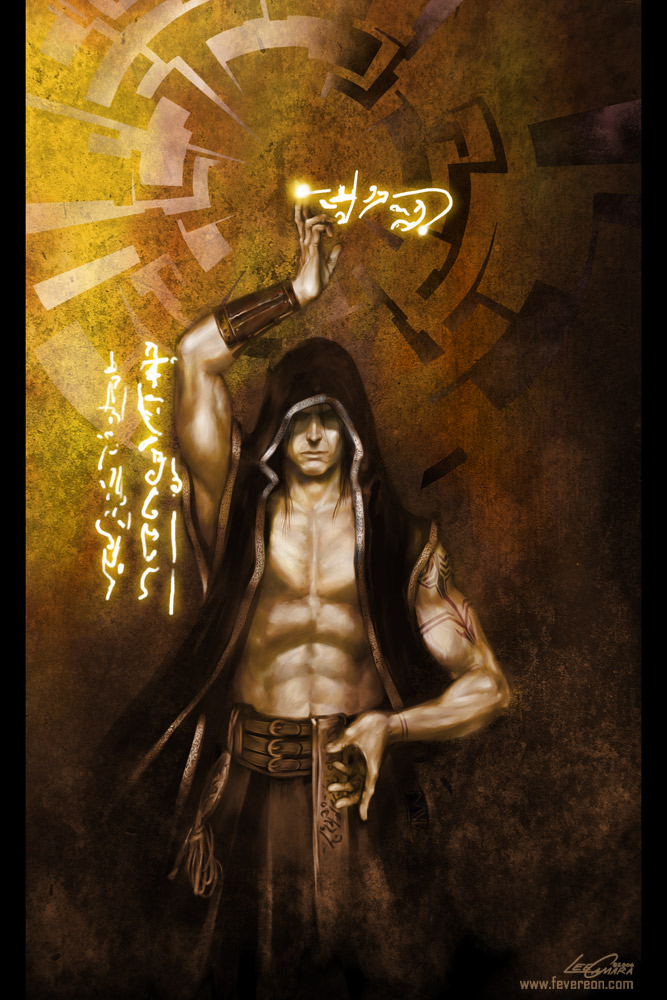
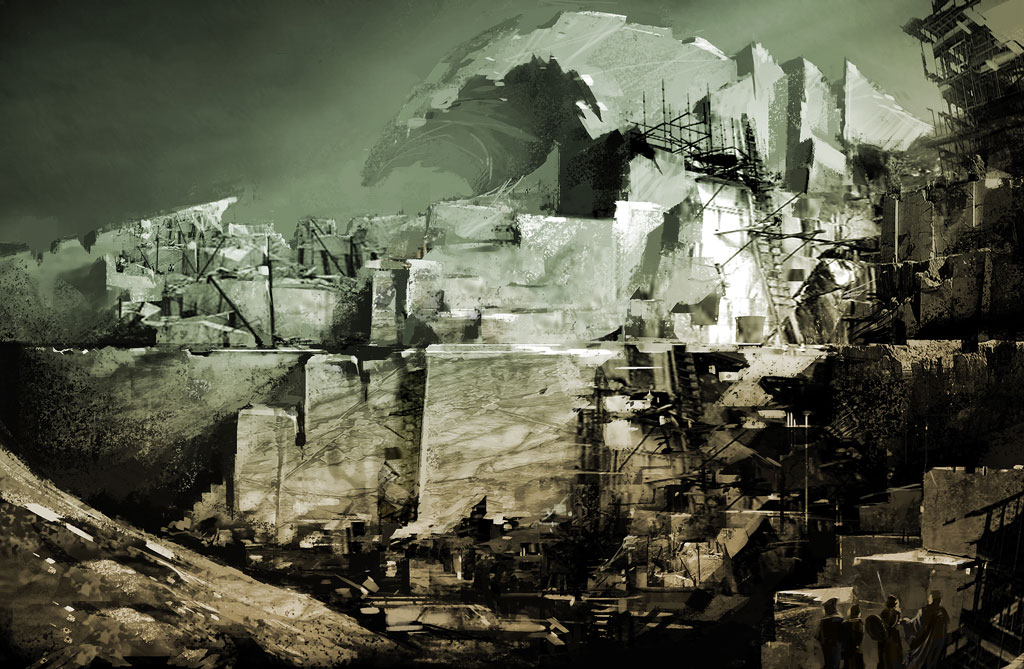
Visual Inspirations for Necrocarcerus
Here's a collection of pieces that capture the look of the Necrocarcerus setting:






Subscribe to:
Posts (Atom)